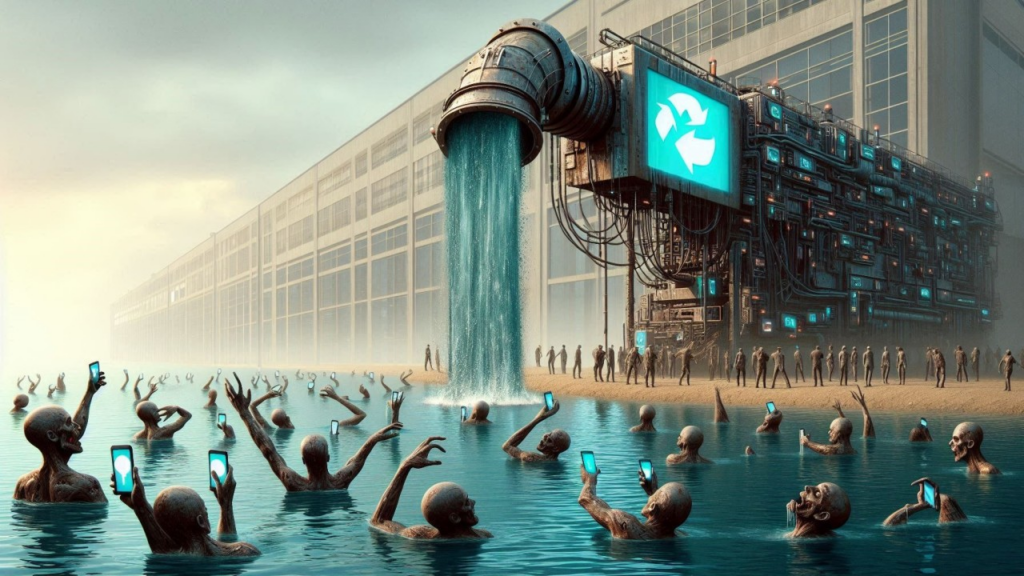
88: Drowning in a sea of AI Slop

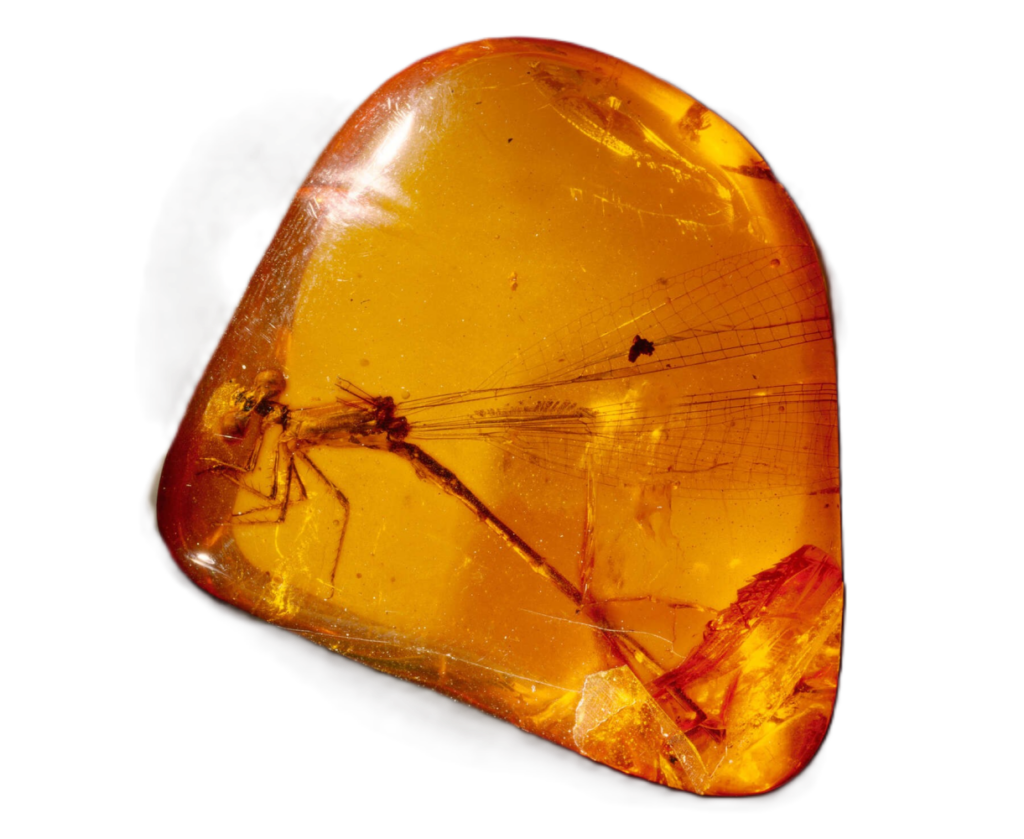
Before diving into today’s missive, let’s think about amber. You know, the yellowy, fossilised tree sap at the core of the Jurassic Park story. It’s been an important commodity for thousands of years and used to be prized for its clarity and flawlessness.
Article content

In the 19th century, it became possible to synthesize amber. You can test for whether a sample is real or artificial, but it tends to damage or even destroy the sample and is time-consuming and expensive to do at scale.

As a result, a specimen of amber which looked like it had no flaws – the top tier stuff – was immediately suspected of being fake, and samples which had visible flaws and were obviously natural became more prized and potentially more valuable than perfect ones (though forgers got involved in other subterfuge). Real, natural and flawed became somewhat more valued than pristine.

Fake vs Real content

A parallel is perhaps looming in the world of Generative AI and the content it produces. It’s now so easy to rattle out a 1,000 word blog post with illustrations and even references to other sources, why should you believe that anything is produced by a person?
Article content
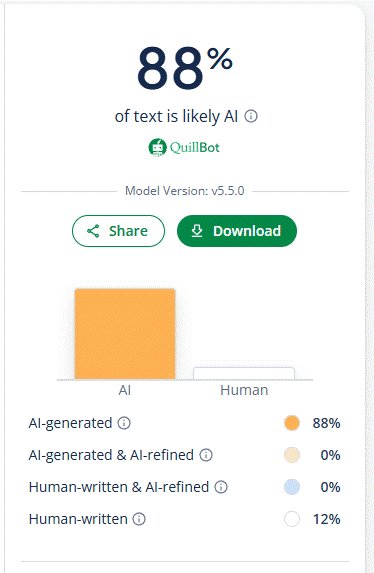
An example analysis of a LinkedIn “Top Voice” poster’s, er, “content”

Try using a tool like Quillbot’s AI Detector – paste some text in there and it’ll give you a score. Even supposedly trustworthy LinkedIn “Top Voices” are cranking out stuff that is largely AI-written. In some ways, it doesn’t matter – if the author isn’t a very good writer but they have good ideas, these tools could help them form the basis of a post.

But if someone is sending you email that is AI-written, sure it’s maybe more efficient from their perspective, but what does that say about how they view their interaction with you? Even using AI tools can get you in hot water.

Will AI start infecting itself?

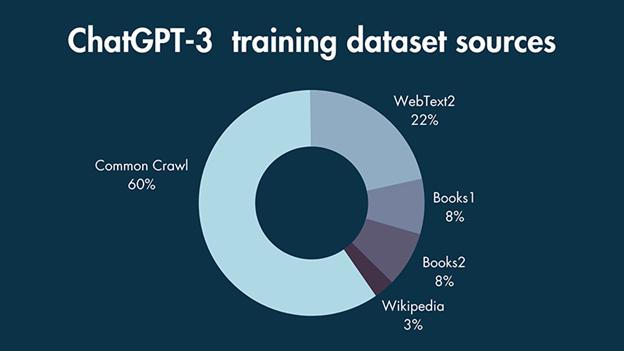
If much of the data that was used to train ChatGPT came from online sources, and even with models dipping into more traditional, copyrighted materials, at what point will AI start feeding on its own output?
Article content

Source – Style Factory Communications

AI Slop” is a term coined for the huge volume of AI-generated material that is of inherently low-quality (regurgitation of other people’s work, or stupid visuals which are nearer to Jackass than Day of the Jackal).

Internet search is starting to get less useful as AI-generated guff displaces real results. Two and a half years ago, an AI researcher from King’s College, London, was quoted in the MIT Technology Review as saying, “The internet is now forever contaminated with images made by AI.”

Research suggests that even 9 months ago, nearly 25% of corporate press releases were AI-generated. It might be possible to tell via Quillbot-type sniff-tests that something is written by AI, and moves are afoot (like Google’s SynthID) to mark stuff as having been AI-created. As creation tools get more sophisticated, however, will there be an arms race to know what’s real and what isn’t?

What and who to believe is getting harder

We’ve been living in a world of misinformation for at least 10 years; from shadowy organizations harnessing data in order to target a specific message to people on social media, all the way up to conspiracy theories where nobody apparently gains other than to shake things up. In civilized societies, we usually have at least one source of truth that we can rely on, rather than believing online whackos.

Leaving aside some lunatics who deride “Mainstream Media”, trustworthy outlets can be relied on to pass on balanced news coverage, and might even have teams like BBC Verify to cross-check sources.

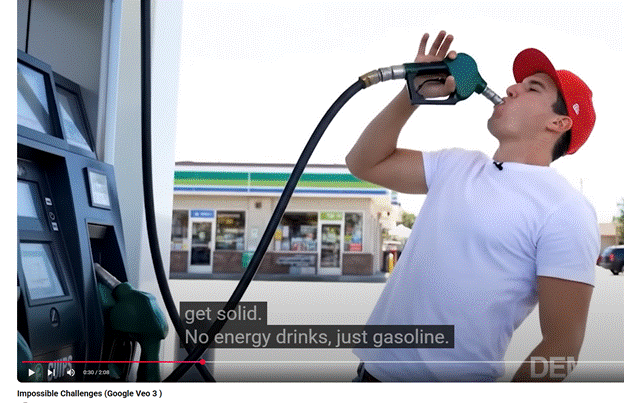
The excellent (and 100% human generated) Rest Is Entertainment podcast recently talked about Google Flow, a tool using their Veo 3 video & audio rendering technology.
Article content

source – YouTube – Impossible Challenges (Google Veo 3 )

Richard theorises that, very shortly, most short-form video content (like adverts or TikToks) will be AI-generated and that anything human-created might become premium.

AI tools can be thought of as akin to a calculator being used by an accountant or a digital easel being used by a great artist. The positive spin is that creative people will use these tools to make it easier: just as bedroom musicians can now produce hit singles that would have taken weeks of studio production, smart people with good ideas will use these tools to develop and release new content more directly.

Until the 1990s, it was seen – by some – as acceptable to put ground up bits of animals into feed given to (herbivorous) cows being reared for meat.

When next-gen AI tools are trained, let’s hope they know how to differentiate the nonsense that’s been generated over the last couple of years or they may get poisoned by the slop their predecessors created.
Article content

#78: We don’t need no AI writin’

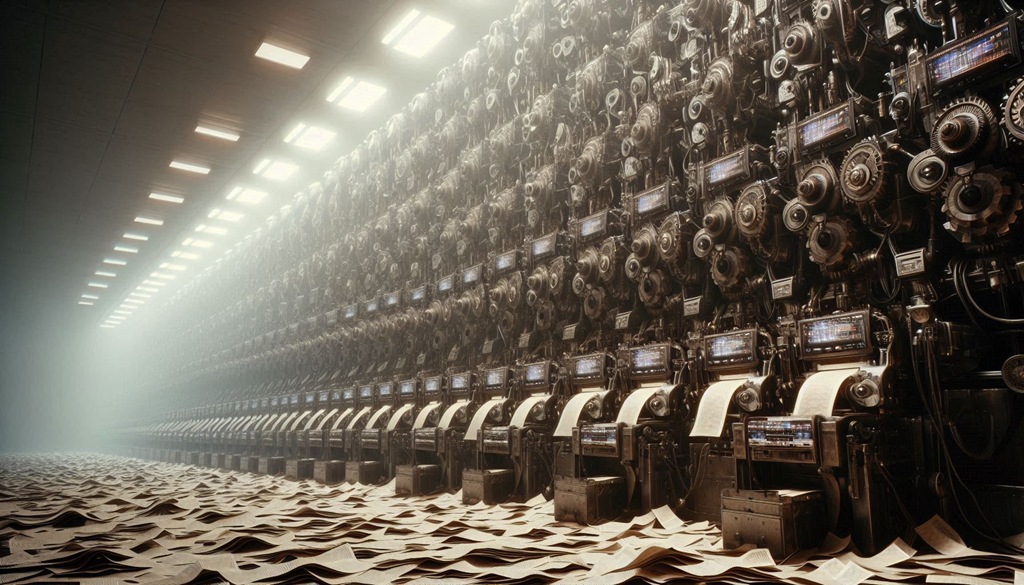
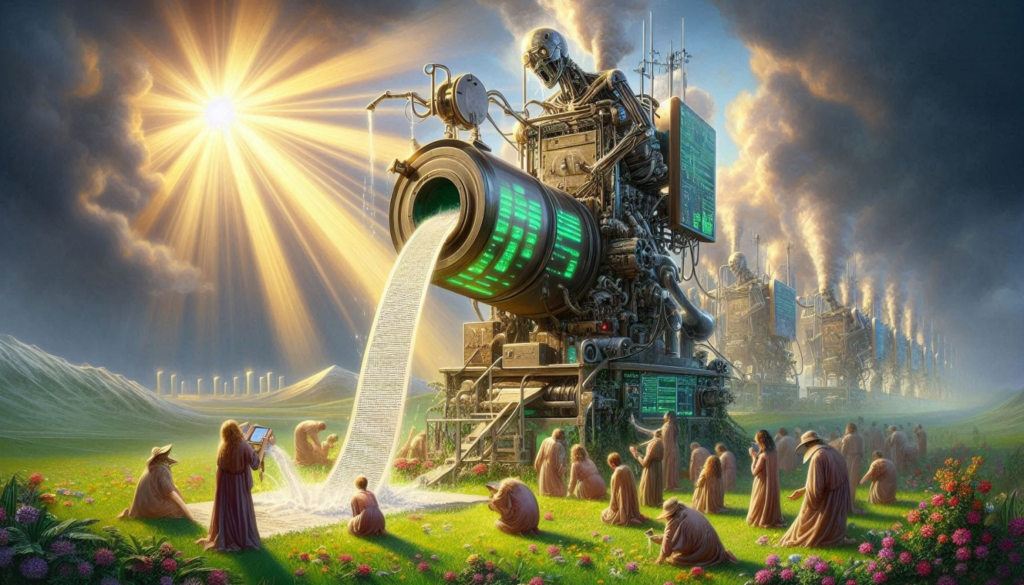
dystopian images of banks of machines all churning out pages of written text.

The stated purpose of ToW in its 15-year history is to share and impart hopefully useful nuggets of information (interspersed with humorous nonsense). In truth, it’s still here because the process of writing it is enjoyable. And feedback seems to say that readers quite like it. The banner images are generated by Microsoft Designer but the rest is 100% hand crafted.

Even 2 or 3 years ago, most people would be astounded at how effectively “machines” could conjure up written prose. AI tools like ChatGPT or Copilot can do a surprisingly good job of generating text, but it’s never all that interesting to read – like the LinkedIn post that starts “Excited to share that…”.

Generative AI tools are good at producing dry, factual text in the same way that nutritional supplements can give you everything you might need to survive. But Huel is never going to rival a Michelin-starred dining experience.

Generation and Summary

Reading stories like how Satya Nadella manages his day can be part inspirational and part alarming. He has Copilot give him a precis of all his emails, actions and the likes, but also summarizes podcasts rather than have him listen to them. Why bother watching a movie when you can read a review? Why read a book when you can find out what happens on Google? Sometimes the journey is worth even more than getting to the destination.

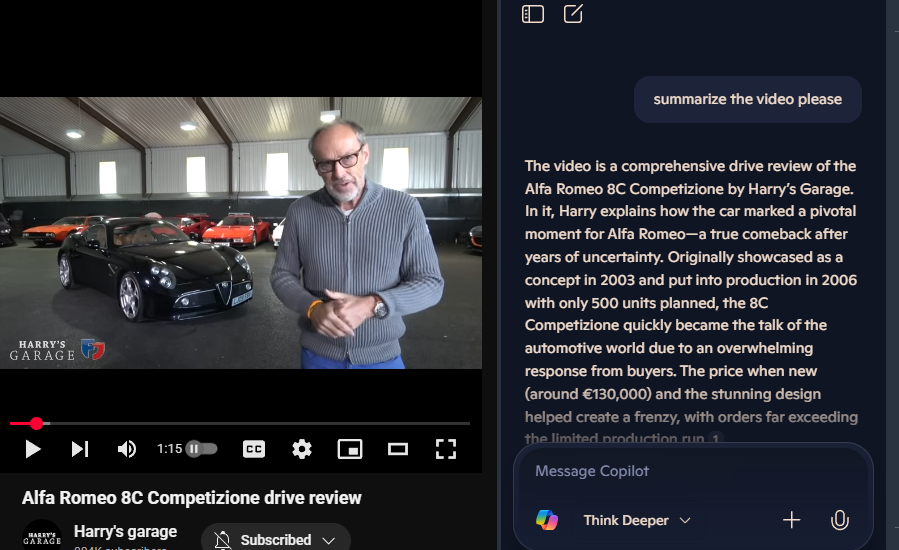
Copilot lets you summarize web pages and even YouTube videos, if you can’t find the time to watch.

Screenshot 2025-05-27 114325

The danger of these kinds of services is that people will stop reading, watching or listening to content as it was originally produced, because it saves them time and effort. Fine, if someone sends you a dull business proposal when all you want is the tl;dr. Given that most corporate documents and emails are tediously written and poorly constructed, that’s fine. Let one person use AI to generate 10 pages of fluff from a few bullet points, only for its reader to reverse the process by feeding into a summarizing machine.

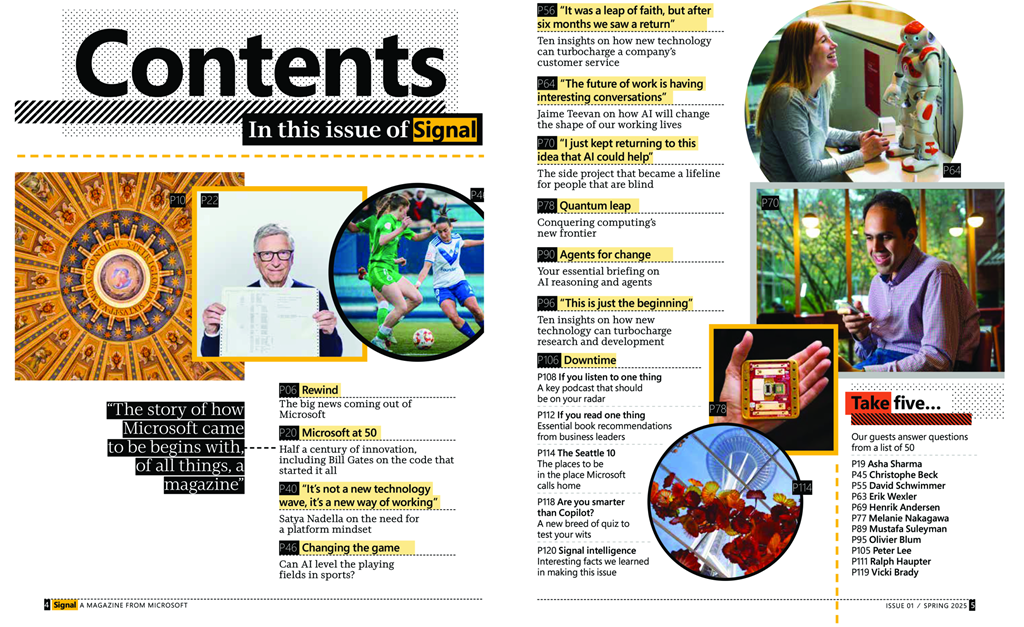
Is it time to re-evaluate how we read and write? The means of acquisition of information really has an impact on how it is understood and on how the recipient decides if it matters. As a reflection of this realisation that the telling of a story is every bit as important as the story itself, Microsoft has recently launched a limited-distribution printed magazine.

604adb36-aa16-47a6-8dae-2b72c7ef2944

The first “Spring 2025” issue of Signal magazine has tips on what to do in the Seattle area, a retrospective look at some of Microsoft’s milestones in its 50th year, book recommendations as well as “5 things” type quickfire interviews with a bunch of business leaders. It’s refreshingly slow and hand-crafted.

signal

Em and En in the spotlight

No, they’re not two extras from The Famous Five, rather em and en are typographical characters who also double up as handy words in a game of Scrabble. The “em” character (“—” ) is traditionally the same width as a capital M, and the “en” dash (“–”) is half the width of em and the same as a capital N. Historically they’re used in a variety of ways, and vary a bit between American English and British English.

Em dashes are often used in place of a colon or––to make a point––in place of parentheses. Though it’s common to not put spaces around an em dash, it is allowable as long as you it consistently. In Word, you can type an em dash by putting two hyphens next to another character, as long as you don’t use spaces.

En dashes are wider than hyphens but sometimes can be used in place of one, or even instead of em dashes (especially in British English writing). When replacing an em dash with an en, do use spaces – and Word generates an en.

The ChatGPT Hyphen

Why are we blathering about ems and ens given the topic is about AI writing? Well…

Using American-oriented genAI tools might give strange-looking phraseology, depending on your own reference point. Some users are saying that the “em” dash is a tell-tale of AI-generated content, and advising people to go through and remove from their text so they don’t look like they’re too lazy to write for themselves. Instafluencers are saying it, so it must be true.

Using, or not using, certain types of punctuation can be an emotive subject. Publishers may specify rules as to when each is acceptable; the UK Gov, for example, rules out using dashes for date or time ranges. The Grauniad says en is the way to go. Tip of the Week agrees: something – en – something is better than something––em—something, so that’s what is used.

There will be no argument.

Spotting AI content

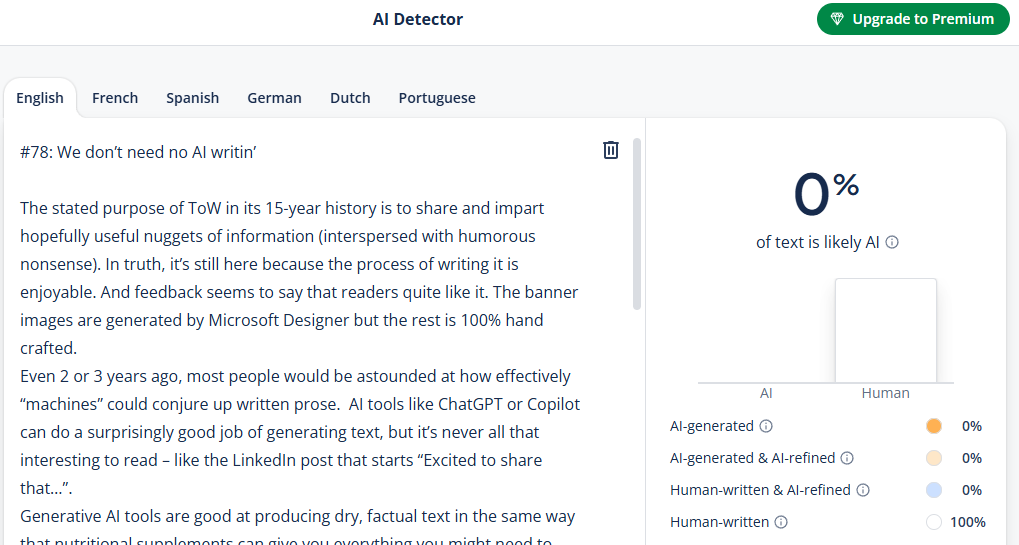
There are various tools out there – Originality.AI, GPTZero, Quillbot and more – which look for common patterns in AI generated docs so you could spot if something is original or not. Handy for teachers marking homework, or office managers looking to see if their staff are being super-efficient or just cutting corners?

Screenshot 2025-05-27 140254

Ah. Refreshingly human.